What the product does
The Opstep GSM Home Automation System allows users to automate electrical appliances using time schedules without requiring a local internet connection or a smartphone application.
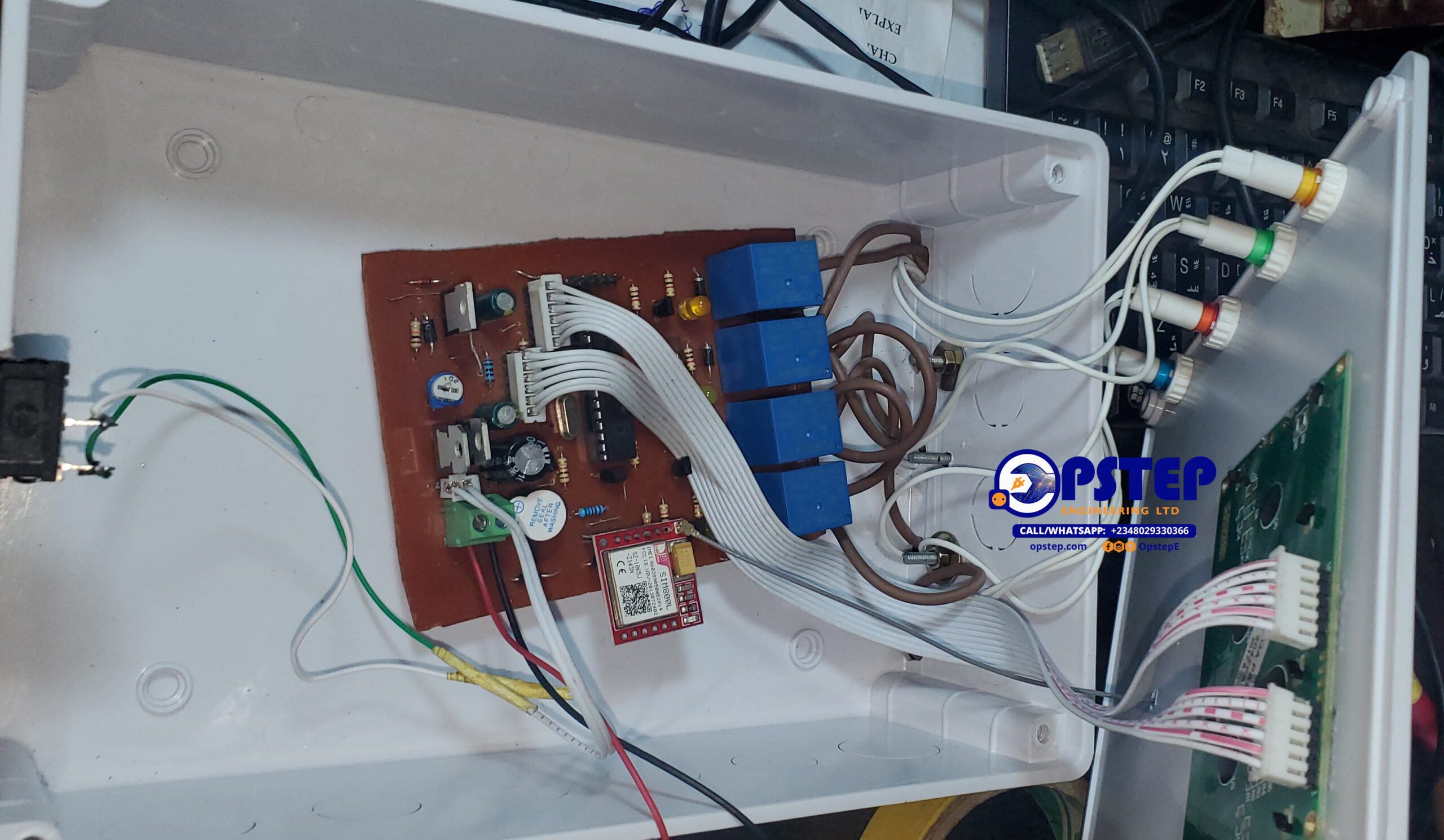
The system uses a PIC18F2620 microcontroller as its main control unit and a SIM800L GSM module for communication through the mobile network. The controller obtains the network-provided date and time and compares the current time with the programmed start and stop times for each output channel.
Each of the four channels has its own schedule. When the current time falls within a channel's configured operating period, the controller activates its corresponding relay. When the scheduled period ends, the controller deactivates that output.
Users can send SMS commands to update the schedules remotely. The configured start and stop times are stored in the microcontroller's internal EEPROM and retrieved during initialization.
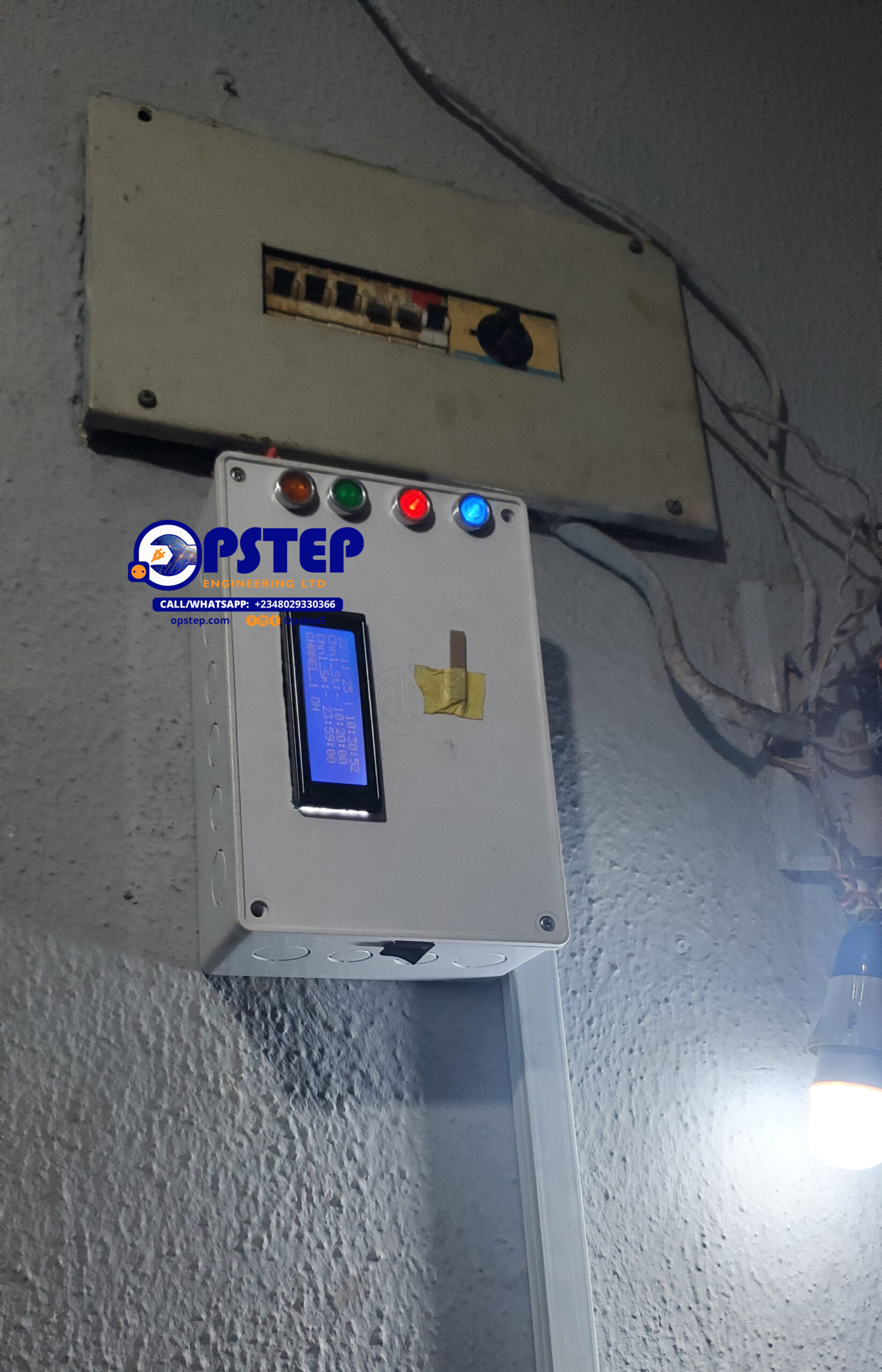
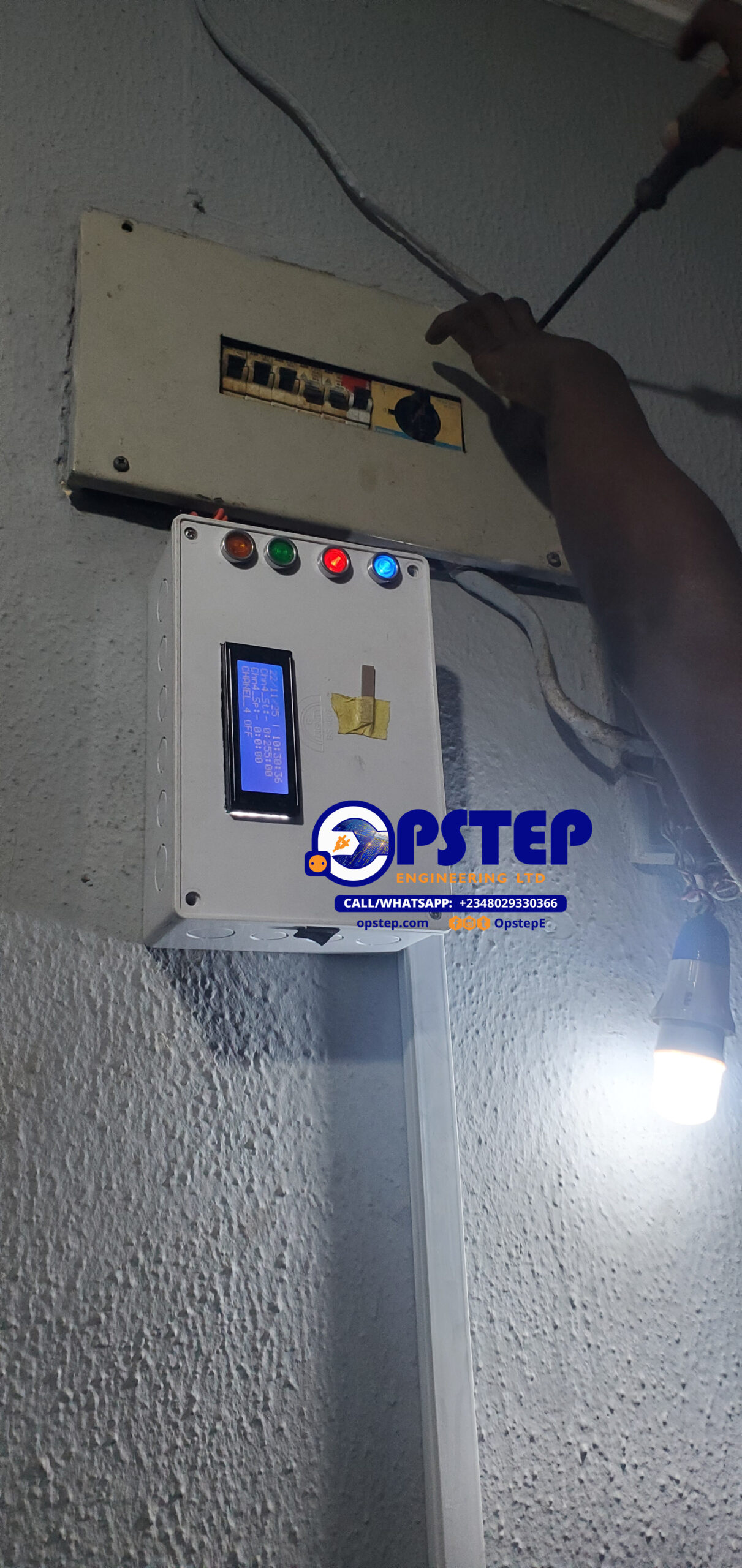
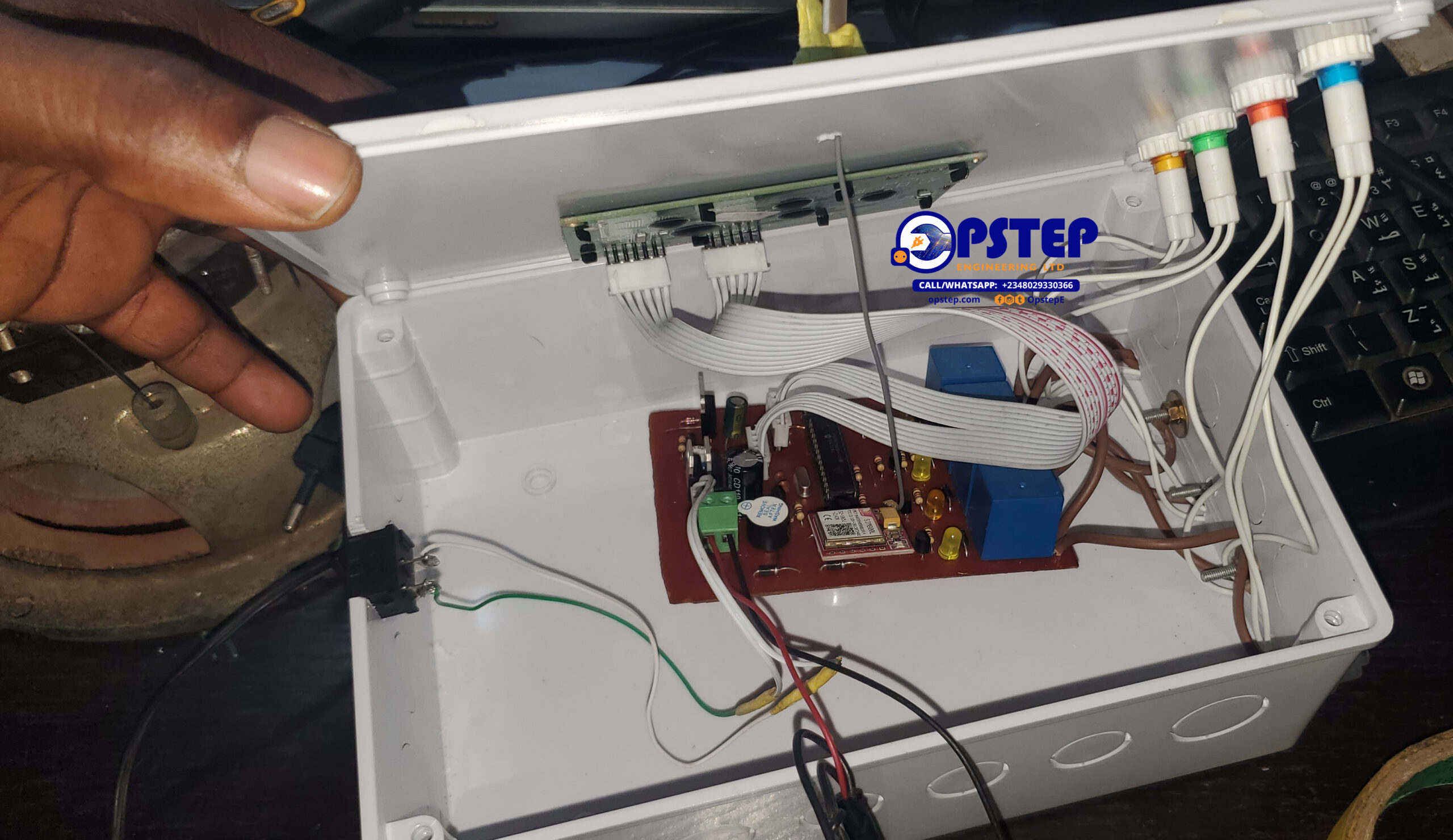
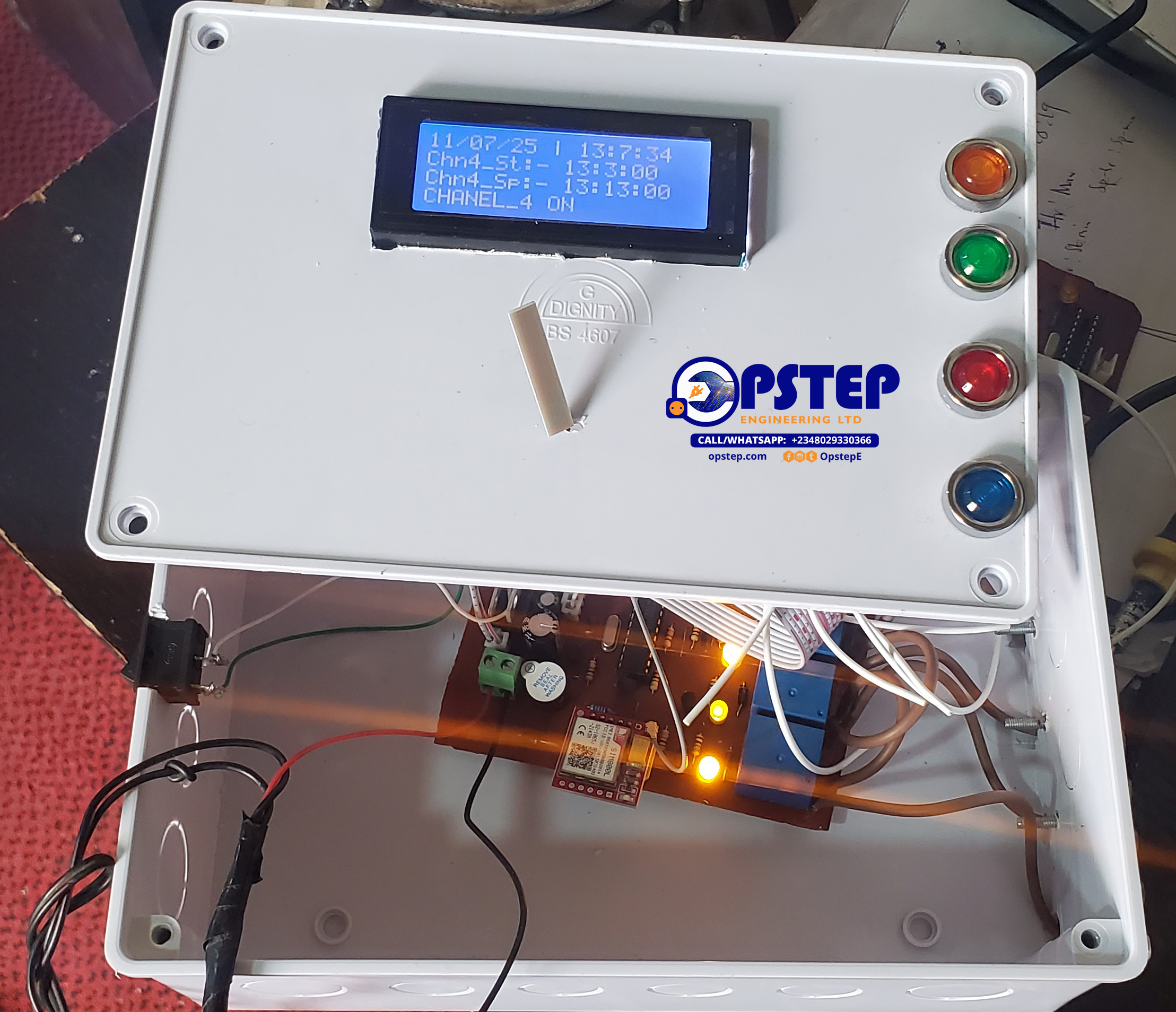
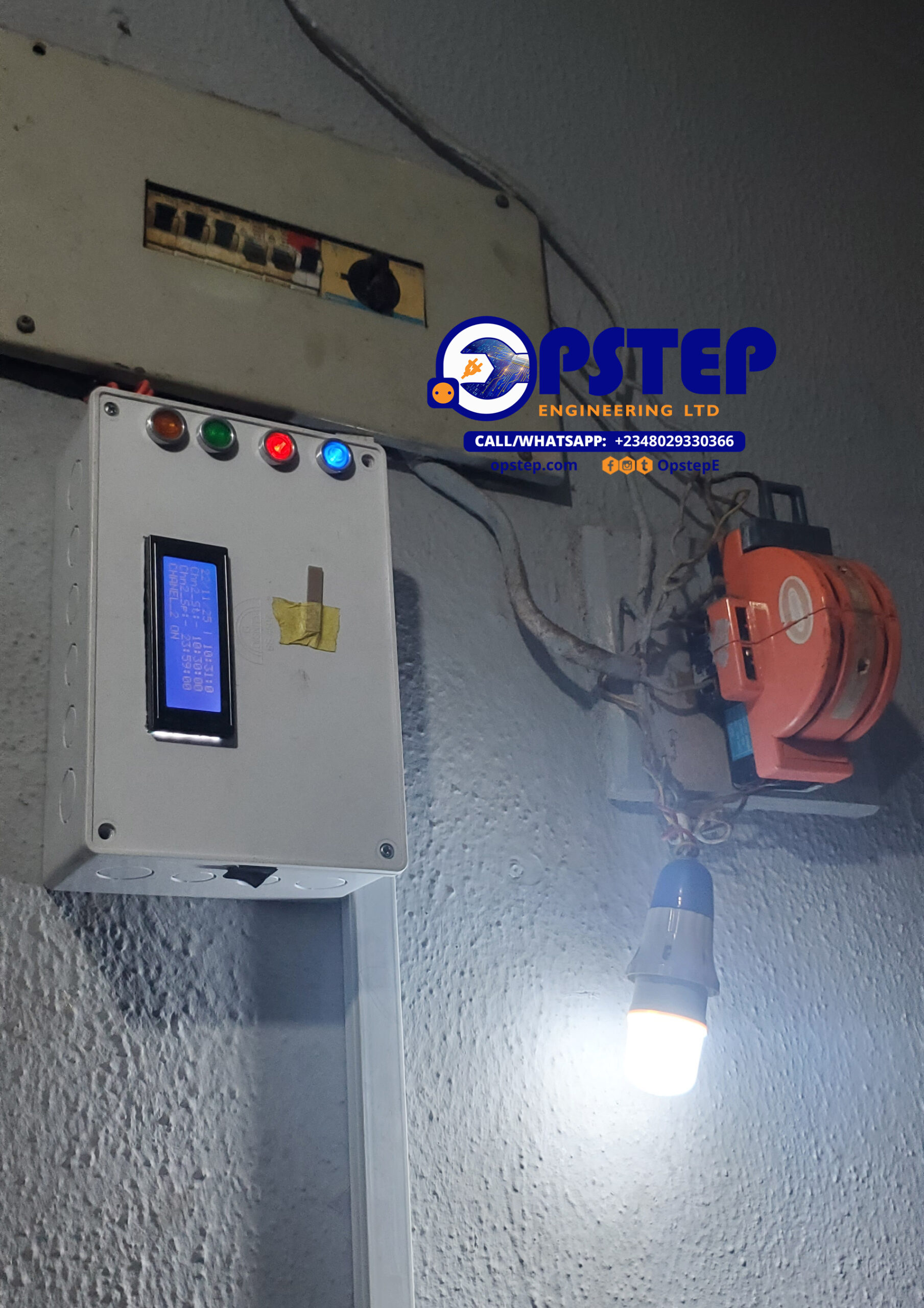
A 20×4 LCD displays the date, current time, channel schedules and channel operating status. Indicator lamps provide additional visual feedback, while the enclosed controller keeps the control electronics organized for installation.
The firmware also accommodates schedule periods that cross midnight, allowing a channel to remain active across two calendar days—for example, an overnight lighting schedule.
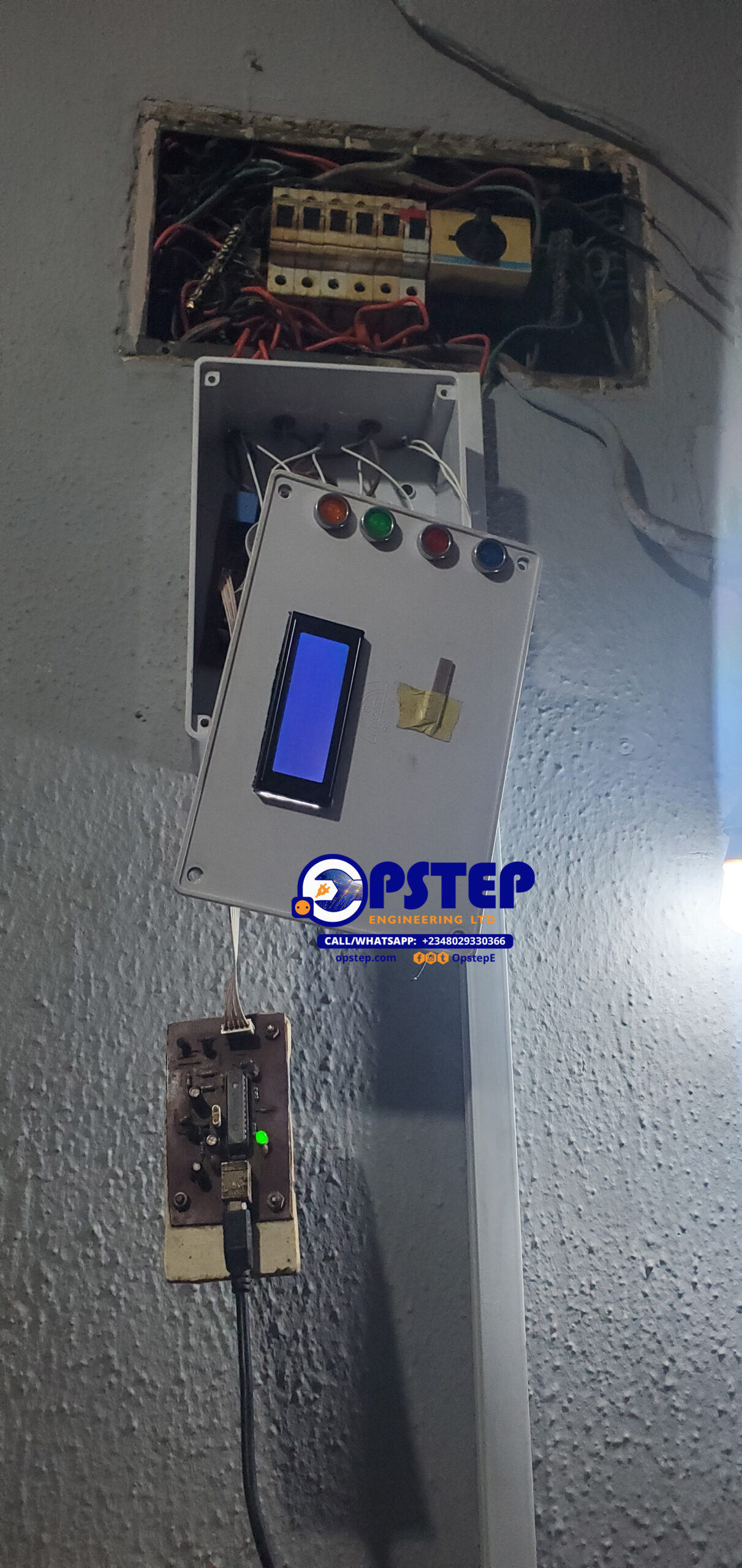
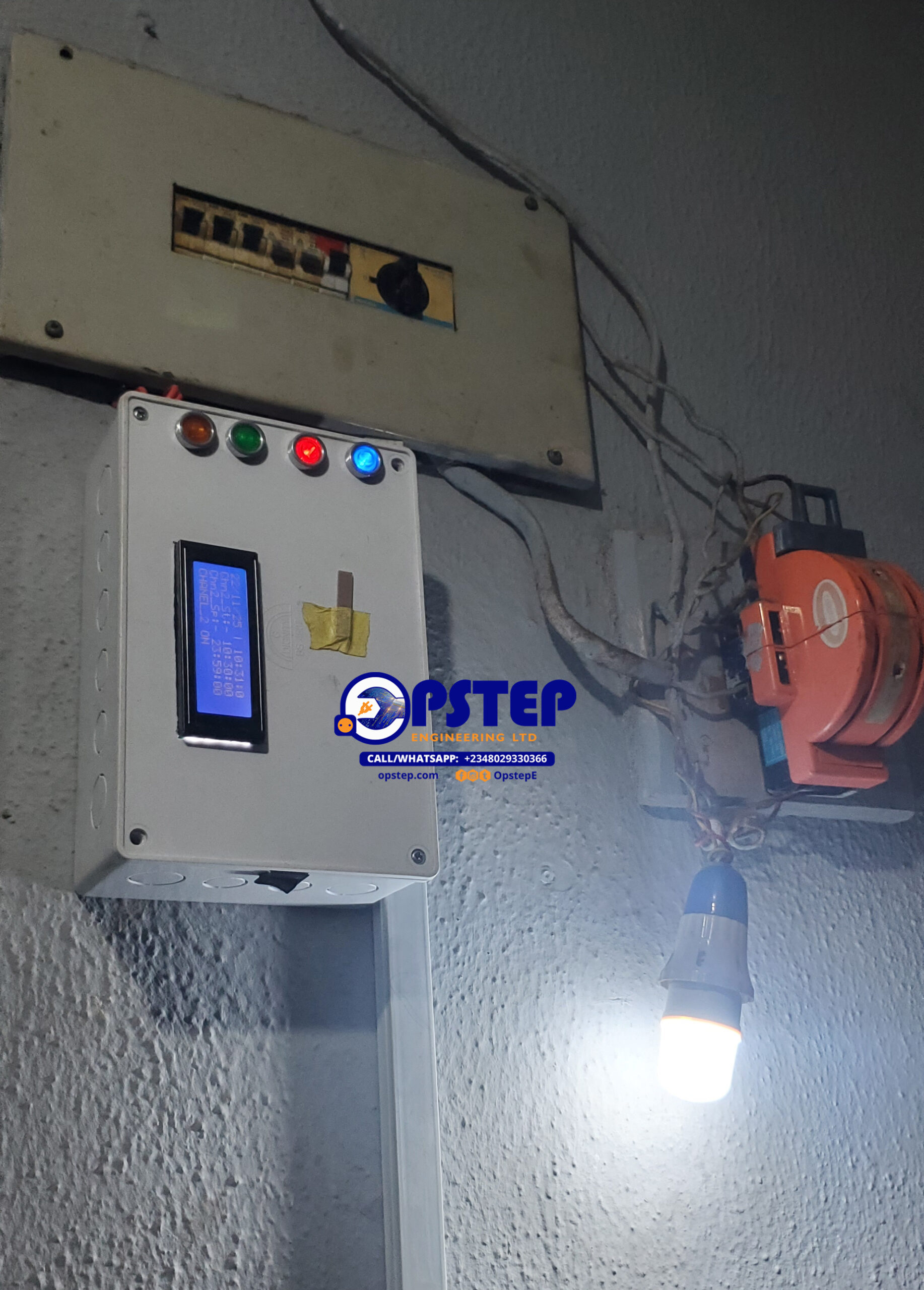
The product was designed, tested and installed, with photographs documenting its operation in an actual installation.
How it works
The PIC18F2620 initializes the LCD, output channels and SIM800L GSM interface.
The SIM800L communicates with the mobile network and provides the network date and time.
The microcontroller reads the current time and compares it with the stored schedule for each channel.
Each channel has its own configurable start time and stop time.
When the current time falls within a channel's scheduled operating period, the controller activates that channel's relay.
The relay switches the connected electrical load.
When the scheduled period ends, the controller deactivates the corresponding relay.
The system evaluates all four output channels independently.
SMS commands allow the authorized recipient to update the channel schedules remotely.
The controller stores configured schedule values in its internal EEPROM.
During initialization, the controller retrieves the saved schedule settings.
The 20x4 LCD displays the current date and time, configured schedules and channel operating status.
Indicator lamps provide additional visual feedback about the installed system.
The controller continues checking the schedules and updating the four outputs as time progresses.
Key Features
Four independent controlled output channels
PIC18F2620 microcontroller
SIM800L GSM communication
Network-provided date and time
SMS-based remote schedule configuration
Independent start and stop times per channel
Automatic time-based appliance switching
Support for schedules crossing midnight
Internal EEPROM schedule storage
20x4 LCD status display
Channel operating-status indication
Four relay-controlled output stages
Terminal-block load connections
Enclosed control unit
Proteus circuit design
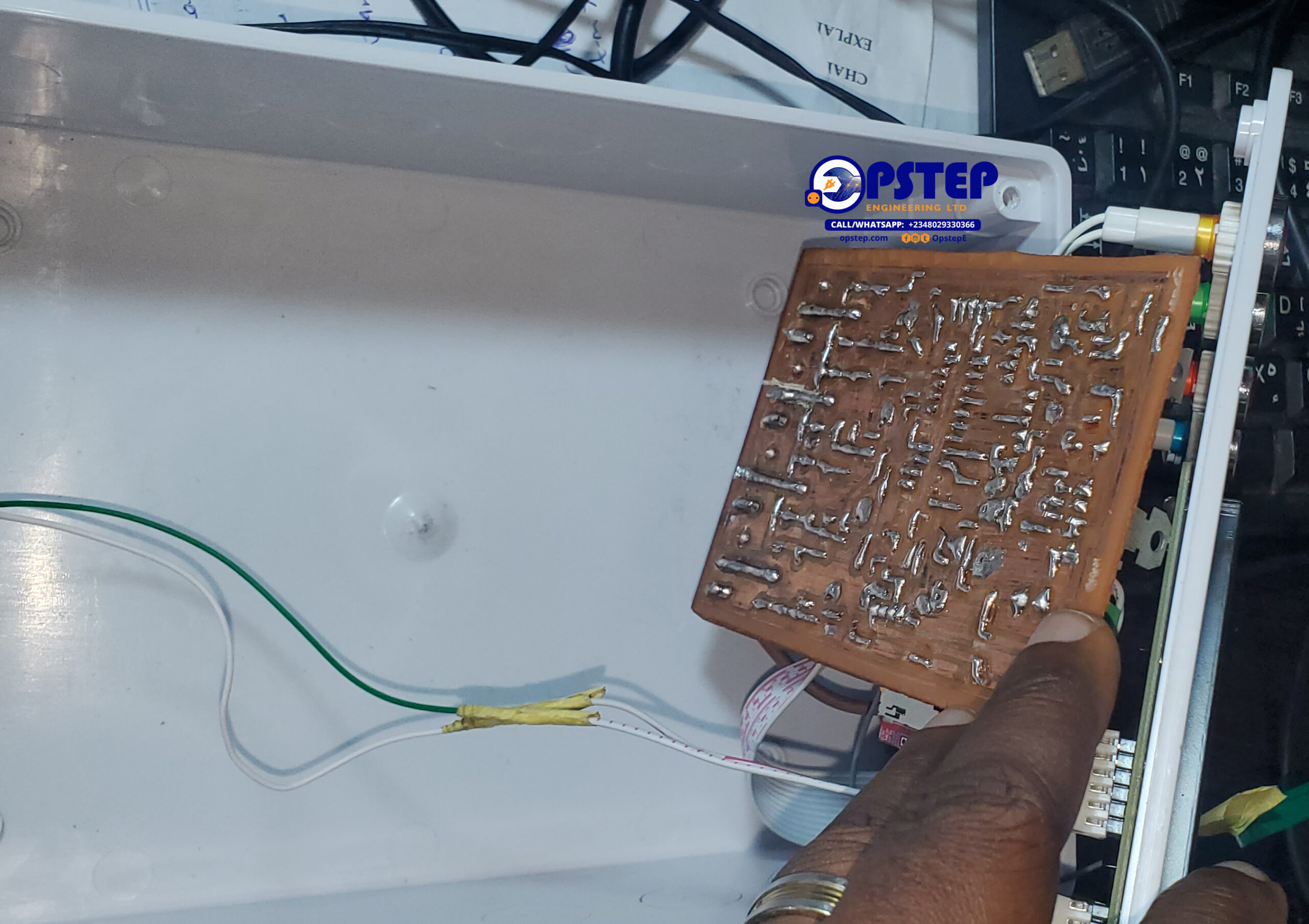
Custom electronic control board
Designed, tested and installed
Applications
- Automatic home lighting schedules
- Outdoor and security-light timing
- Scheduled control of compatible household appliances
- Shop and office lighting automation
- Timed electrical equipment operation
- Selected commercial premises requiring independent scheduled outputs
- Installations where GSM communication is more practical than local network connectivity
These are potential applications of the system, subject to the electrical ratings and suitability of the connected loads.
User & Business Benefits
Four-channel control: Operate four separate electrical outputs with individual schedules rather than using one common timer for every load.
Remote schedule updates: Change the configured operating periods through SMS without needing to access the controller physically.
Automatic daily operation: The controller manages switching according to the programmed times.
Network timekeeping: The SIM800L obtains network time for the scheduling function, reducing reliance on a manually set clock.
Persistent settings: Schedule values are stored in EEPROM and can be retrieved after a restart.
Overnight scheduling: Start and stop times can span midnight, which is useful for security lighting and overnight appliance operation.
Local status visibility: The LCD displays time, schedules and channel status, while indicator lamps make the operating state easier to observe.
Installed engineering solution: The supplied photographs document the enclosed unit and its use in an actual electrical installation.
Public Specifications
Specification Details
Product category Home automation and appliance control
Product designation 3.6 kVA four-channel system
Main controller PIC18F2620
Communication module SIM800L GSM
Communication method SMS and GSM network time
Output channels 4 independently scheduled channels
Switching method Relay-controlled outputs
User interface 20×4 character LCD
Schedule configuration SMS commands
Schedule storage Internal microcontroller EEPROM
Time source GSM network-provided time
Schedule operation Daily time-based switching, including overnight periods
Output connections Relay contacts and terminal blocks
Design evidence Proteus schematic and firmware
Implementation status Designed, tested and installed
Electrical rating note: The firmware identifies the product as a 3.6 kVA system. This should be treated as the product's stated design designation, not a guarantee that every combination of four loads can be operated at that total. Actual allowable loading depends on the relay ratings, load type, wiring, protection and installation conditions.
Opstep Engineering Role
Embedded firmware, GSM communication, time-based automation and multi-channel electrical load control.
The project integrates a PIC18F2620 microcontroller, SIM800L GSM interface, LCD, persistent schedule storage and four relay-driver stages into a complete appliance-control system. The firmware manages the time comparisons, SMS schedule updates and independent switching decisions for the four channels.
Product Gallery